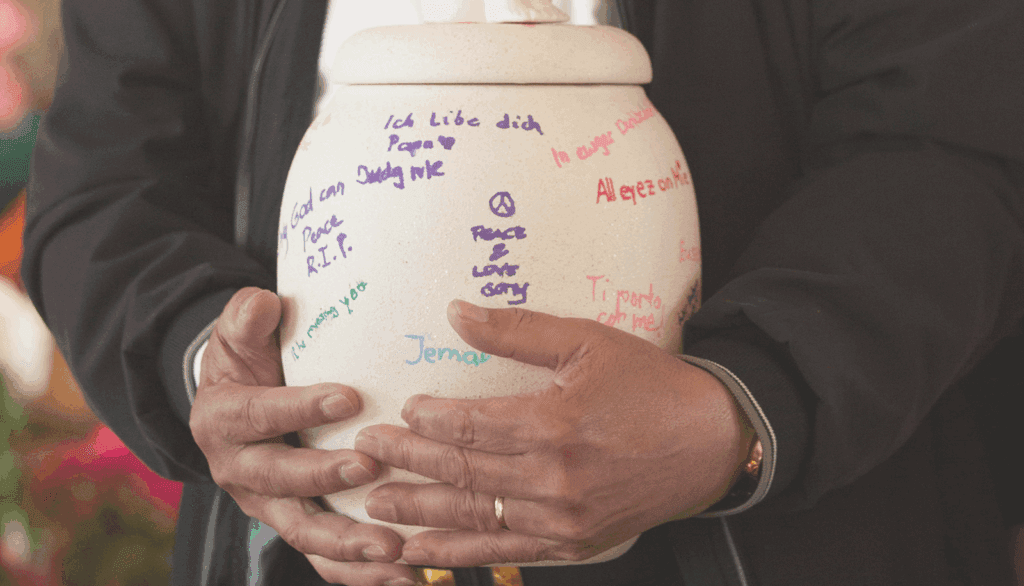
Cremation or Embalming: Understanding the Difference
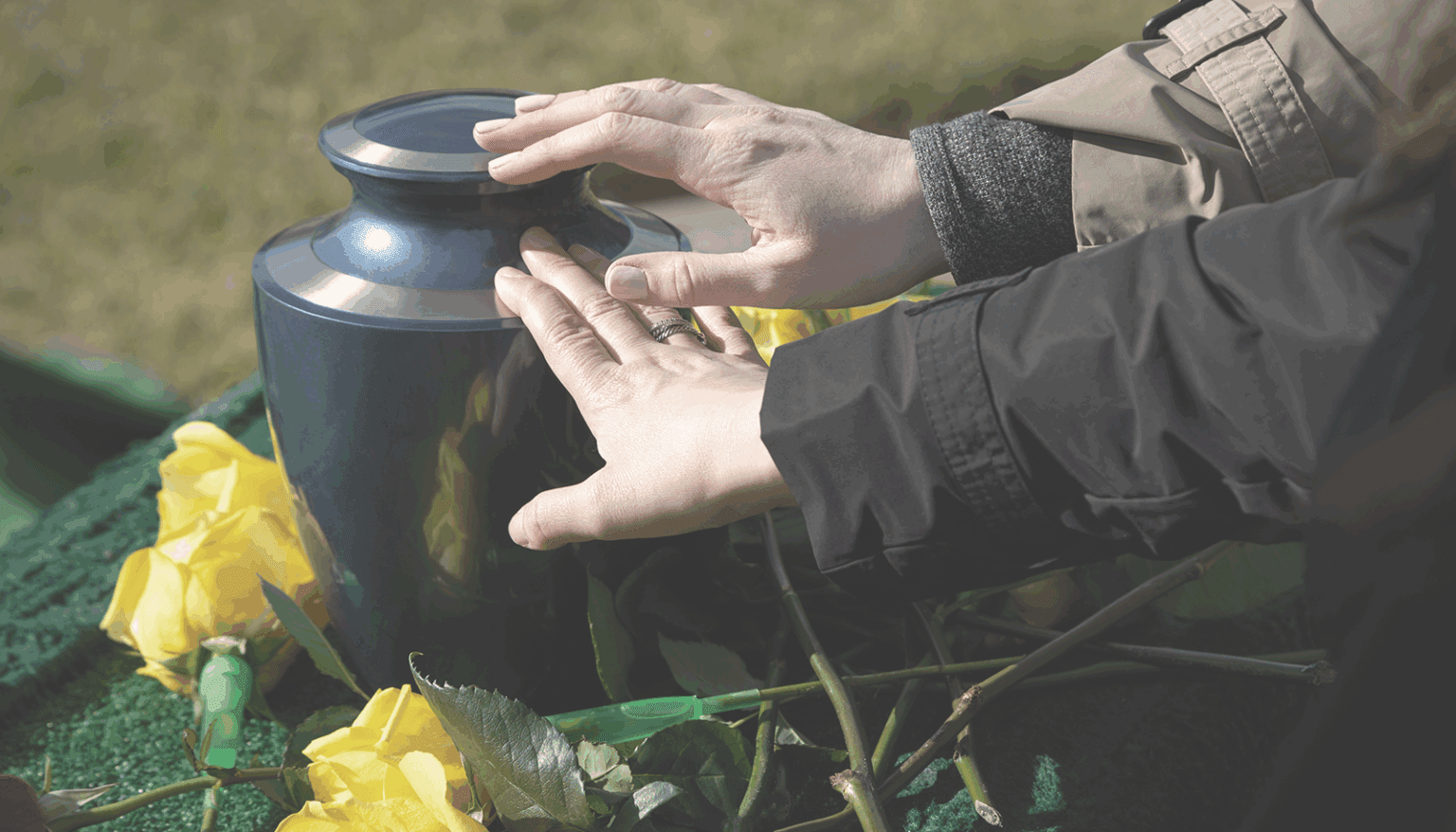
What is Cremation?
Cremation involves reducing the body to ashes in a crematorium designed for this purpose. The ashes are then returned to the family, usually in an urn. In Quebec, cremation is increasingly chosen because it is:
- Often more affordable than a casket burial;
- More flexible for the family (ceremony now or later, here or elsewhere);
- Compatible with various rituals (ceremony at the funeral home, church, home, columbarium, etc.).
Contrary to what is sometimes heard, choosing cremation does not mean ‘doing nothing’. One can very well have a full ceremony with the casket present, followed by cremation, or a simpler celebration around the urn.
What is Embalming?
Embalming is a process by which specialized products are injected into the body to:
- Delay decomposition;
- Improve the appearance of the deceased for viewing (visitations, funeral home, chapel);
- Allow for an extended visitation or a funeral on a specific date (for example, while waiting for family from out of town).
Embalming is not mandatory in all cases, but it is often recommended when:
- An open casket viewing is planned for several hours or days;
- The death occurred under particular circumstances and preparation for viewing is necessary;
- One wishes to offer loved ones a final farewell in the most serene possible context.
Historical and Cultural Context in Quebec
For a long time in Quebec, the norm was traditional funerals with embalming and casket burial. The deceased was viewed at home or at the funeral home, then buried in the cemetery. Cremation was perceived as rarer and sometimes misunderstood.
Today, the reality has changed:
- Families are more geographically dispersed (Montreal, regions, outside the country);
- Values are diversifying: some desire more simple, understated, or secular rituals;
- The cost of funerals has become an important factor in decision-making.
As a result, cremation has gained significant importance, sometimes with very few rituals, sometimes, on the contrary, with ceremonies very rich in symbols. The role of Complexe funéraire Lachance is precisely to help you find the balance that suits you, whether with or without embalming.
The Financial Aspect: A Question That Needs to Be Addressed
Even when discussing grief, it is normal to ask about the costs. In general:
- A simple cremation, without a ceremony at the funeral home, is the most economical option;
- A cremation with traditional funeral services involves room fees, staff costs, embalming (often), and logistics;
- An embalming with casket burial involves the cost of the casket, the cemetery plot concession, and funeral services.
During a funeral pre-arrangement meeting, we take the time to detail the scenarios, costs, and financing options. The goal is not to ‘upsell,’ but to respect your means and your values.
For a neutral legal overview of funeral service and pre-arrangement contracts, you can also consult Éducaloi.
Available Options, from Simple Cremation to Traditional Funerals
Simple Cremation
Simple cremation (often called ‘direct cremation’) usually includes:
- Transportation of the body to the complex or crematorium;
- Basic administrative procedures (documents, certificates);
- The cremation itself;
- The return of ashes to the family in a basic urn.
There is no ceremony at the funeral home included in this type of package. However, the family can then organize a more intimate ritual:
- A gathering at home or at a cottage;
- An inurnment in a columbarium;
- A burial of the urn in the cemetery;
- A commemorative moment later, on the anniversary date, etc.
This is often the option chosen by individuals who desire something simple, discreet, and economical, while allowing the family the freedom to mourn in their own way.
Cremation with Traditional Funeral Services
One can also choose cremation, while retaining the hallmarks of a traditional ceremony. The process then closely resembles ‘classic’ funerals, with one difference: instead of going to the cemetery with the casket, it is directed to the crematorium.
Typically, this includes:
- A visitation period at Complexe funéraire Lachance (open or closed casket, according to wishes);
- A ceremony at the funeral home or in a place of worship, with music, tributes, personalized rituals;
- The transfer of the casket to the crematorium, followed by cremation;
- The subsequent return of the urn to the family.
This option allows for combining cremation and more traditional rituals. It is often chosen when the family desires a more formal final farewell, with embalming so that the deceased has a peaceful appearance during visitations.
Embalming and Cremation
Some families choose to have the deceased embalmed even if the final disposition is cremation. Why? Because embalming allows for:
- A better presentation for visitations;
- Greater scheduling flexibility, especially if family is traveling from afar;
- A more serene farewell moment, especially when there are young children or deeply grieving loved ones.
In this case, the process resembles a traditional funeral (visitations, viewing, sometimes a mass or celebration), but the final disposition is cremation rather than casket burial. For many, this is a compromise that respects both the budget and the need for ritual.
Embalming and Casket Burial
This is the most traditional option, still very common, especially among families attached to the idea of a memorial place in the cemetery and a more classic ritual.
In general, this includes:
- Embalming and preparation of the deceased;
- Visitations at the funeral home;
- A ceremony (religious or not) with the casket present;
- A casket burial in a cemetery or mausoleum;
- A plot concession (often for several family members).
This option is often perceived as more ‘complete’ in the collective imagination, but it is not the only way to honor a life. The most important thing is that the chosen option makes sense for you.

How to Choose What Is Right for You?
Your Values, Beliefs, Your Story
The first question to ask is not ‘what is usually done?’, but rather:
- What are our values? (spiritual, family, ecological, etc.);
- What did the deceased person love? Were they rather discreet or very social? Traditional or not?
- What do we need to grieve? A large gathering? A more intimate moment?
Cremation or embalming are not ‘good’ or ‘bad’ choices. They are different tools to create the ritual that helps you through this stage.
The Budget Question… Without Hesitation
During a period of grief, one sometimes feels that talking about money is taboo. However, it is perfectly healthy and responsible to address the subject. Our team takes the time to:
- Clearly present the different scenarios involving cremation or embalming;
- Explain what is included (transportation, paperwork, venue, ceremony, urn, casket, etc.);
- Review with you what is essential… and what is optional.
Our goal at Complexe funéraire Lachance is not to push you towards the most expensive option, but to build a realistic, dignified, and respectful tribute that suits your family’s situation.
The Importance of Fully Understanding the Procedures
Beyond cremation or embalming, there is a host of administrative formalities that follow a death (documents, benefits, notifications to governments, etc.). Many families tell us they quickly feel overwhelmed.
That is why we offer comprehensive support for:
- Mandatory documents (declaration of death, certificates, etc.);
- Procedures with various organizations, depending on the situation;
- More specific questions (death benefits, annuities, insurance, etc.).
For a general overview of the procedures required by the State, the Government of Quebec also offers an online checklist. However, you do not have to do everything alone: the same team that helps you choose between cremation and embalming can also guide you through the legal and administrative formalities.
Pre-arrangements: Deciding in Advance to Ease the Burden on Your Loved Ones
One way to simplify all of this for your family is to make funeral pre-arrangements. During your lifetime, you can:
- Choose between cremation or embalming, with the details that are important to you;
- Plan a realistic budget suited to your situation;
- Indicate your preferences for the ceremony, music, texts, etc.
This prevents your loved ones from having to guess what you would have wanted, at a time when they are most in shock. They can focus on what matters most: gathering, remembering, and supporting each other. To discuss this, you can make an appointment with us via our Contact Us page or by phone.

Conclusion: Cremation or Embalming, the Important Thing Is to Be Well Supported
Ultimately, the question is not just ‘cremation or embalming?’, but rather: ‘what ritual will truly help us say goodbye?’ Both options can be very dignified, respectful, and meaningful, especially when considered based on your values, family history, and financial reality.
At Complexe funéraire Lachance, our team is here to:
- Calmly explain the differences between the available choices;
- Clearly present the costs and scenarios, without pressure;
- Personalize the ceremony, whether it is very traditional or more intimate and modern.
If you are hesitating between cremation and embalming, or if you wish to discuss it for your pre-arrangements, please do not hesitate to contact our team. Together, we will take the necessary time to find the option that truly suits you.
Frequently Asked Questions about Cremation and Embalming
Does Cremation Prevent Traditional Funerals?
No. One can absolutely have visitations at the funeral home, a full ceremony and choose cremation as the final disposition. The difference is that instead of a casket burial, the body is cremated after the ceremony.
Is Embalming Mandatory in Quebec?
Embalming is not mandatory in all cases. However, it is often recommended when there is a viewing of the body over several hours or days, or when the family wishes a final farewell with an open casket. During a meeting, we explain when it is truly useful.
Is Cremation Always the Cheapest Option?
In general, a simple cremation is more economical than a traditional burial. However, as soon as complete funeral services, a viewing, venue rental, and various services are added, the total cost depends mainly on the type of ceremony chosen, rather than solely on the disposition (cremation or burial).
Can We Plan All of This in Advance?
Yes. Funeral pre-arrangements allow you to make decisions calmly, plan a budget, and record your wishes. It is a great gift you give to your loved ones.